
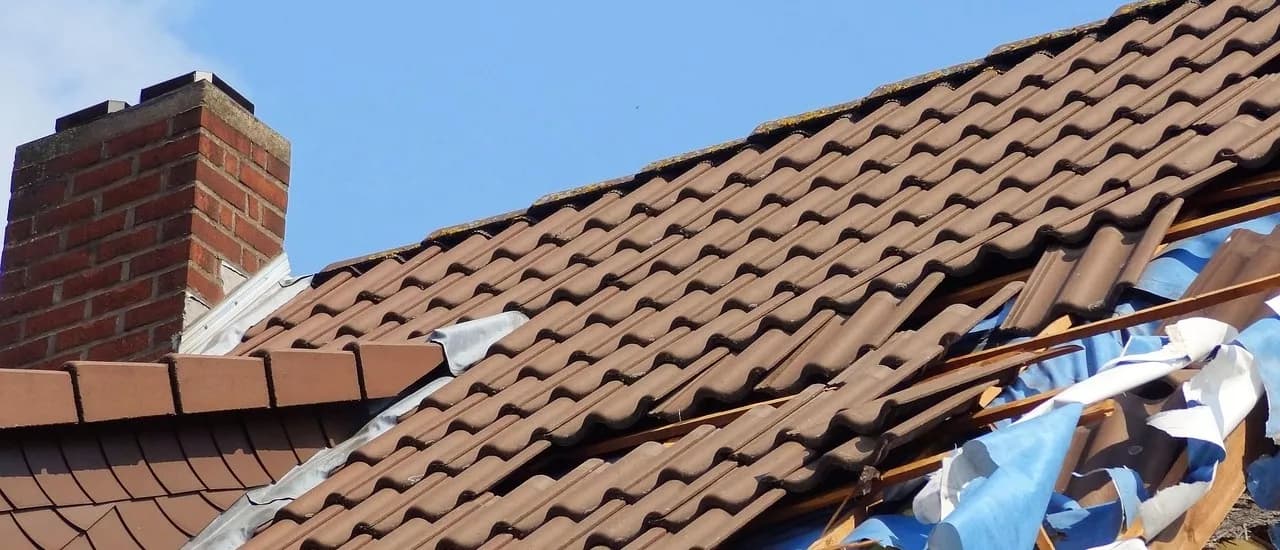
A nor'easter does more damage to roofs in Nassau County and Westchester than any other kind of weather we see, and it does it in a way that is easy to underestimate from the ground. The wind comes from the northeast for hours, sometimes a day or more, and it is often loaded with rain or wet snow. Roofs that were fine through a summer thunderstorm come apart at the edges. This checklist is what we tell homeowners to do in the first few days after the storm passes.
REVMA is based in Bayside, Queens and works across Nassau County and Westchester. We handle storm damage from emergency tarping through insurance-covered replacement.
Why nor'easters take roofs apart at the edge
Wind does not lift a roof from the middle. It gets under the edge: the starter course at the eave, the shingles along the rakes, and the first few courses above the eave. Once one tab lifts, the wind has a handle on the next one, and the failure runs up the roof course by course. This is why the North Shore of Nassau, the South Shore barrier island and the exposed ridgelines in Westchester lose shingles in the same places every time. It is also why, when we replace a roof in these markets, the perimeter fastening and the starter detail get more attention than the field.
The other thing a nor'easter does is drive rain sideways and upward. A roof that sheds normal rain can leak in a nor'easter because water is pushed up under shingles and into valleys and flashing that rely on gravity alone. Those leaks often show up inside the house before any damage is visible outside.
Step one: look from the ground, not the roof
Do not get on the roof after a storm. Wet shingles, lifted tabs and hidden damage make it dangerous, and you can see most of what matters from the yard or the street. Walk the whole perimeter and look for:
- Missing shingles or tabs, especially along the eaves, rakes and ridge.
- Lifted or creased shingles that are still attached but no longer lying flat. A creased shingle is broken even if it is still there.
- Shingle pieces, granules or flashing on the ground, in the gutters, or at the bottom of the downspouts.
- Displaced ridge cap along the peak.
- Flashing pulled away at the chimney, at walls, or around vents.
- Gutters torn loose or bent, and downspouts detached. A gutter that came off usually took the drip edge and the first course with it.
- Tree limbs on the roof or branches that have clearly struck it.
- Debris in valleys, which will hold water against the roof until it is cleared.
Then go inside and check the attic and the top-floor ceilings for damp insulation, water stains, or daylight where there should be none.
Step two: decide whether it needs a tarp today
If shingles are missing down to the underlayment, if flashing is open, if a limb has punctured the deck, or if water is coming in, the roof needs to be made watertight before the next rain, not after the insurance adjuster comes. A tarp is a temporary fix that prevents the interior damage from becoming the expensive part of the claim. Call us for a storm damage visit; we respond fast after regional storms and prioritize open roofs.
If the damage is a few lifted tabs on an otherwise sound roof and nothing is coming in, it can wait a few days for a proper look.
Step three: document everything before anyone touches it
Insurance claims go better with evidence gathered before the repair. From the ground:
- Photograph every side of the house, wide enough to show the whole roof slope.
- Photograph each area of visible damage close up, with something in frame for scale where you can.
- Photograph debris on the ground and in the gutters.
- Photograph any interior water damage: stains, wet insulation, dripping.
- Note the date and time of the storm and of the photographs.
Keep receipts for any emergency tarping. Most policies cover reasonable steps taken to prevent further damage. When we tarp a roof we photograph it before and after and give you the images for the claim file.
Step four: repair, replace or claim
This is where an honest inspection earns its keep. The right answer depends on three things: how much of the roof is damaged, how old the roof is, and whether water got in.
When a repair is enough
A roof with years of life left that lost a handful of shingles along one edge is a repair. We replace the missing and creased shingles, reseal the edge, and refasten the drip edge and gutter. The roof goes back to being the roof it was.
When it is a replacement
Widespread lifting across more than one slope, creased shingles throughout, a roof already near the end of its service life, or water damage to the deck or the interior usually means replacement. Repairing a 20-year-old roof course by course after a storm is money spent on a roof that is about to be replaced anyway. And a roof that lost shingles in one nor'easter will lose more in the next, because the seal strips on the surviving shingles have been broken.
When it is an insurance claim
Wind damage is a covered peril on most homeowner policies. If the damage is more than a few shingles, it is usually worth filing. We document the roof, provide a written scope and estimate, meet the adjuster on site, and handle the paperwork through to the insurance roof replacement. Homeowners do not need to negotiate a roofing scope with an adjuster on their own.
What the replacement should include
If the storm has made the decision for you, the new roof should be specified so the next nor'easter does not. That means shingles with a high wind rating installed to the manufacturer's high-wind nailing pattern, enhanced perimeter fastening, bonded starter strip, ice and water membrane well beyond the code minimum at the eaves and in the valleys, and a rebuilt roof edge with new drip edge, gutter apron and gutters that are properly fastened. Our guides to South Shore roofs, North Shore roofs and Westchester winters cover the specifics for each market. For the material options, see asphalt shingles and composite roofing.
Getting a roof estimate in Nassau County or Westchester
REVMA is based in Bayside, Queens, is licensed and insured (2126882-DCWP), and holds a Westchester County license (WC-38805-H25). After a storm, call (646) 889-4529 for tarping and an assessment, or request an estimate online if the roof is holding. Financing is available on complete replacements, including the portion of a claim the policy does not cover.