
Roof replacement in Garden City comes with a step that most Nassau County towns do not have: the Incorporated Village of Garden City takes a real interest in what the roof looks like from the street. That is not a complaint. It is a large part of why the village looks the way it does. But it changes the order of operations on a roof project, and homeowners who plan for it get a better roof with less waiting.
This guide covers the housing stock, the review process as we have experienced it, and the materials that actually fit these houses. REVMA is based in Bayside, Queens and works across Nassau County; Garden City is one of our regular markets for slate and luxury shingle work.
The houses: a century of substantial construction
Garden City was laid out as a planned community in the nineteenth century, and the original Stewart-era homes are joined by a large stock of early 1900s and 1920s houses: Tudors, Colonials, Dutch Colonials and some grand Georgian Revivals, particularly in the Estates and Central sections. Post-war construction filled in the rest, mostly at a comfortable scale.
What that means for roofing:
- Original slate is common. A meaningful share of the pre-war homes were roofed in slate, and some of it is still up there a century later. Whether that slate is worth saving is the first question on any of these houses.
- Complex rooflines. Tudors with steep gables, Colonials with dormers and side wings, and the occasional turret. The flashing and valley work is a large part of the job.
- Solid framing. Homes built for slate can usually take slate again, or a composite that weighs a fraction as much.
- Consistent streetscapes. The village's character depends on roofs that look right together, which is the reason review exists.
How the village review process works
Garden City runs its own building department, separate from the Town of Hempstead that surrounds it. A roof replacement generally needs a building permit filed with the village, and work that changes the appearance of the roof from the street can go to the village's architectural design review board before the permit is issued.
In practice that means:
- Material and color are decided early. The review looks at what the new roof will be, so you need a sample and a product sheet, not a vague plan to pick something later.
- Like-for-like is the smoothest path. Replacing slate with slate, or with a composite slate profile in a matching color, rarely raises questions. Replacing slate with a three-tab asphalt shingle usually does.
- The calendar drives the schedule. Review boards meet on a set schedule. If the submission misses a meeting, the job waits for the next one. We build that into the timeline rather than promising a start date we cannot hit.
- We file the paperwork. The permit application, the review submission and the inspections are ours to handle, not the homeowner's.
We confirm the exact requirements for the specific property before quoting, because they differ block by block and the village updates its process from time to time.
Materials that fit Garden City houses
Natural slate
On a Tudor or Colonial that has slate now, the honest first step is an inspection. Slate roofs fail in two different ways. If the slates are sound and the flashing, valleys and ridge are what leaks, that is a restoration and it costs far less than a new roof. If the slates themselves are soft, flaking or shedding, the roof is done and the choice is new Vermont slate or a composite. We tell you which situation you have before we quote either.
Composite slate
DaVinci and Brava composite slate gives the profile and color range the review board expects, at a weight any framing can carry, with a Class A fire rating and a Class 4 impact rating. It is the usual answer when a slate roof is beyond economical repair and the budget does not stretch to natural slate.
Luxury asphalt shingles
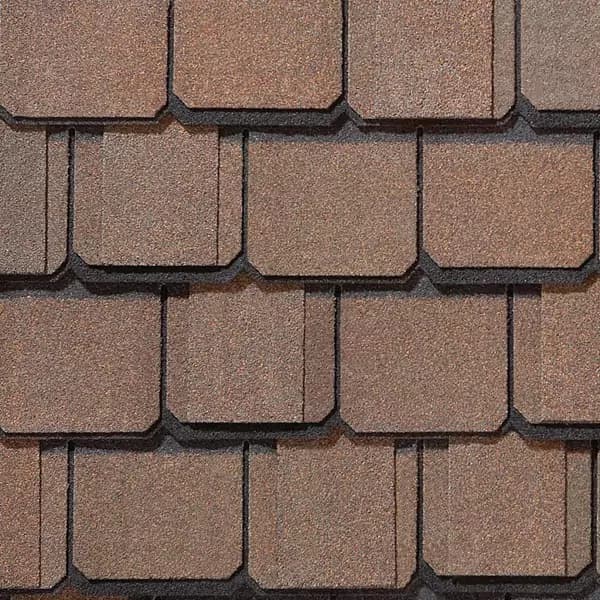
For Colonials and post-war homes that had asphalt to begin with, or where slate was never the material, a luxury shingle is the right tier. CertainTeed Grand Manor reads as slate from the street with its deep shadow lines and heavy tabs. Carriage House gives a shake-style look for houses where that suits the architecture. Both are far easier to get through review than a standard architectural shingle on a prominent house.
What we steer people away from
A basic three-tab or thin architectural shingle on a large pre-war Garden City house tends to look wrong, tends to get questioned in review, and tends to be replaced sooner. The saving on the day is real but small relative to the roof, and it is usually not worth it here.
Wind, weather and the roof edge
Nassau County sits in a higher design wind zone than the city, and Garden City, while inland, still gets the full force of nor'easters. Wind damage begins at the edge of the roof: the starter course, the rakes, and the first courses above the eave. On every Garden City replacement we upgrade the perimeter fastening and run ice and water underlayment well past the code minimum at the eaves and in every valley.
The roof edge also includes the gutters. On a tear-off the edge is open, which is the cheapest moment to replace gutters that are undersized, sagging or pulling from the fascia, and to install new drip edge and gutter apron so water goes into the gutter instead of behind it. We include that in the scope when it is needed rather than leaving it for a second contractor to work over a new roof later.
Nearby: Mineola, Franklin Square and Hempstead
The same crews cover the towns around Garden City. Mineola is its own incorporated village with its own building department. Franklin Square and the unincorporated parts of Hempstead permit through the Town of Hempstead. The houses there run smaller and newer, with more capes and split-levels, and the material conversation is usually about GAF or Owens Corning architectural shingles rather than slate. The wind detailing is the same everywhere in the county.
Getting a roof estimate in Garden City
REVMA is based in Bayside, Queens and is licensed and insured (2126882-DCWP). Our estimate on a Garden City home starts with the roof, the attic and the framing, so the material we recommend is one the house can carry and the review board will accept. Call (646) 889-4529 or request an estimate. If you are on the North Shore, our guide to roof replacement in Great Neck and Manhasset covers the village process there. Financing is available on complete replacements.