
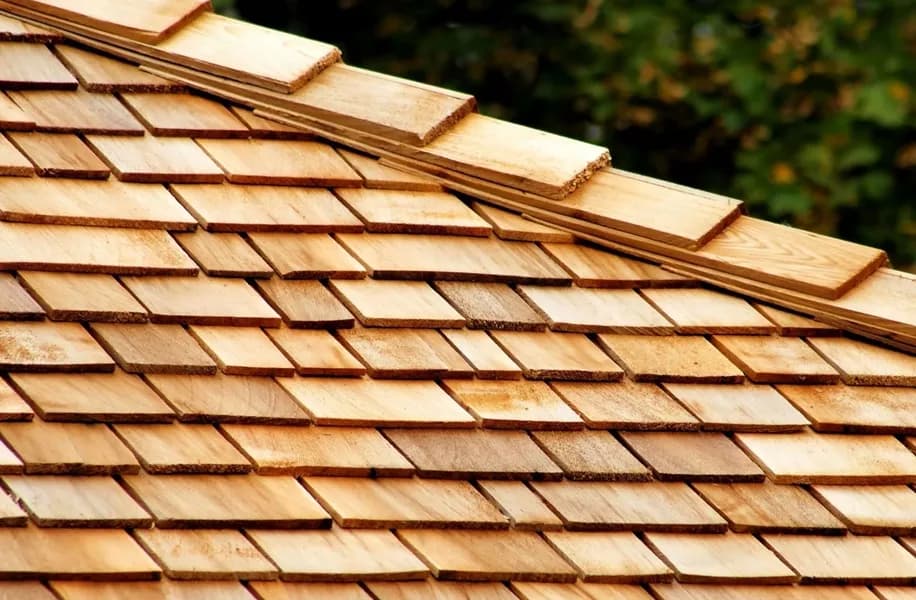
Canadian cedar stands far above domestic cedar in both quality and performance because of its exceptional growing conditions and superior milling standards. Cedar sourced from British Columbia grows in a cooler, wetter climate, which produces tighter grain structure, richer color, and far greater stability compared to cedar grown in more variable U.S. climates.
This tighter grain means Canadian cedar is naturally more resistant to warping, splitting, and moisture-related damage, giving it a significantly longer service life on roofs and exterior applications. Canada also enforces strict forestry regulations and certification programs that ensure logs are harvested responsibly and consistently graded, resulting in a product that is more uniform, durable, and reliable.
When you choose Canadian cedar, you're choosing a premium material with unmatched longevity, structural integrity, and visual appeal, making it the superior option for any high-performance cedar roofing project.
Canadian Cedar Advantages
1. Tighter Grain & Greater Stability
Canadian cedar grows in cooler, wetter climates, which produces a tighter grain structure. This makes it less likely to warp, cup, twist, or split over time. The dense grain pattern provides exceptional dimensional stability, ensuring your roof maintains its appearance and performance for decades.
2. Higher Heartwood Content
Canadian cedar typically comes from older, more mature trees, giving it richer heartwood. Heartwood is the part of the tree that is naturally resistant to rot, insects, and moisture. This higher heartwood content translates directly to better protection for your home and a longer-lasting roof.
3. Superior Aesthetic Quality
Canadian cedar has a more uniform color, cleaner grain, and fewer defects, creating a premium appearance ideal for cedar roofing. The rich, warm tones and consistent texture make Canadian cedar the preferred choice for homeowners who value both performance and curb appeal.
4. Better Natural Durability
Because of its environment and maturity, Canadian cedar lasts longer and performs better in harsh climates, making it a top choice for long-term roofing performance. The natural oils and preservatives in Canadian cedar provide superior protection against the elements without the need for chemical treatments.
5. Strict Grading & Forestry Standards
Canada enforces rigorous forest management and grading rules, leading to more consistent, reliable, and sustainable cedar products. Organizations like the Cedar Shake & Shingle Bureau (CSSB) maintain strict quality standards that Canadian mills must meet, ensuring every bundle meets premium specifications.
6. Industry-Leading Mills
British Columbia is home to some of the world's best cedar shake and shingle mills. These facilities are known for high-quality workmanship and vigorous quality control. Mills like Waldun Forest Products and S&W Forest Products have decades of experience producing premium cedar products that meet or exceed industry standards.
Domestic Cedar Drawbacks
1. Faster Growth = Weaker Grain
Much of the U.S. cedar grows in warmer, drier environments, resulting in a looser grain that is more prone to warping, splitting, and premature aging. This faster growth rate produces wood that simply cannot match the density and stability of Canadian cedar.
2. Lower Heartwood Content
Domestic cedar often comes from younger trees, giving it more sapwood. Sapwood lacks the natural chemical defenses of heartwood, making it less resistant to rot and insects. This means domestic cedar requires more maintenance and has a shorter expected lifespan.
3. Inconsistency in Quality
Domestic cedar can vary greatly depending on the region and mill. This inconsistency can produce more defects, knots, and irregularities that affect both appearance and performance. Homeowners may receive products that don't meet their expectations.
4. Shorter Lifespan
Due to lower density and reduced natural oils, domestic cedar generally doesn't last as long when used on roofs or exterior cladding, especially in harsh or wet climates. This can lead to more frequent repairs or earlier replacement.
5. Less Stringent Grading & Milling Standards
Regulations and grading systems for domestic cedar are not as uniform as those in Canada. This can lead to lower-quality shingles or shakes entering the market, making it harder for homeowners to know exactly what they're getting.
6. Color & Appearance Are Often Inferior
Domestic cedar tends to have lighter or uneven color, more sap streaks, and more imperfections. While these issues don't always affect performance, they can detract from the premium aesthetic that many homeowners seek when choosing cedar.
The Bottom Line
When investing in cedar roofing, the source of your material matters significantly. Canadian cedar, particularly from British Columbia, offers superior quality in every measurable category: grain structure, heartwood content, durability, appearance, and consistency.
At REVMA, we exclusively use premium Canadian cedar from trusted suppliers like Waldun Forest Products and S&W Forest Products. We believe our customers deserve the best, and Canadian cedar delivers the performance and beauty that makes a cedar roof project worth the investment.
Ready to learn more about premium cedar options for your home? Contact us today for a consultation and discover why Canadian cedar is the smart choice for your roofing project.